The Story, in One Minute

Why this site exists, before you choose where to go in it.

Brains compute through wiring β€” billions of cells connected by trillions of synapses β€” and for most of history that wiring was invisible. It no longer is. Electron microscopes can now photograph every wire in a piece of brain, and in 2025 Nature Methods named EM connectomics its Method of the Year: something that used to be impossible has quietly become an industry. The maps already exist for a worm, a fly, and cubic millimeters of mouse and human cortex; the next expedition is a whole mouse brain. Getting there is a relay with seven legs, and every part of this site teaches one of them:

  1. Stop time. Chemicals freeze the tissue mid-thought; heavy-metal stains ink every wire's outline.
  2. Slice. A diamond knife shaves it thousands of times thinner than a hair.
  3. Image. Electron microscopes photograph every slice β€” about two million gigabytes per cubic millimeter.
  4. Align. Software reassembles the slices into one seamless 3D volume.
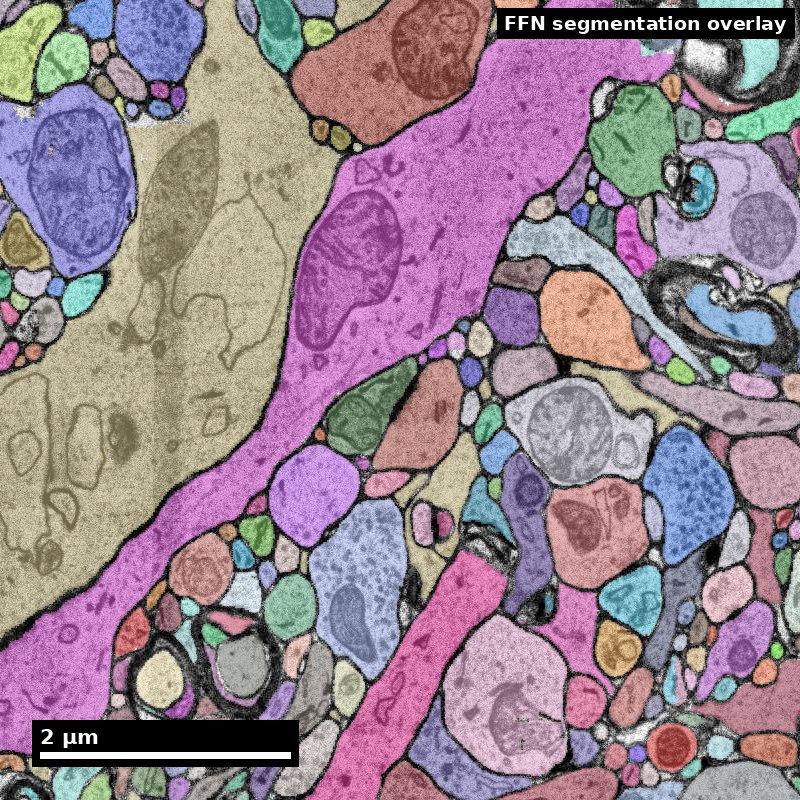
  5. Segment. AI colors in every neuron and finds every synapse.
  6. Proofread. Humans fix the AI's mistakes and make the map true.
  7. Discover. Scientists read the finished map and settle decades-old debates.

Choose Your Pathway

Purpose-built experiences for the people who move neuroscience forward.

🧠

For Students

A guided path from fundamentals to connectomics analysis β€” pick your track, do the labs, end each unit with an artifact.

Plan Your Path
πŸ”¬

For Scientists

The reference layer: content library, dataset access with versions, the atlas of specs and acronyms, and open problems scoped for teams.

Open the Core
🀝

For Mentors

The facilitator guide and 25 ready-to-run session kits: what to say, what to watch for, and how to grade the reasoning.

Facilitator Guide
πŸ›οΈ

For Programs & Funders

The education model behind the site, the evidence it rests on, and how NeuroTrailblazers fits the BRAIN CONNECTS ecosystem.

See the Model

Jump Into Core Resources

Everything you need to learn, practice, and apply connectomics workflows.

🧭 Technical Training

Follow the canonical nanoscale connectomics track from imaging foundations to NeuroAI analysis.

Open Technical Track

🧭 Learning Tracks

Navigate learning through three tracks aligned to knowledge, skills, and professional growth.

Explore Tracks

πŸŽ“ Teaching Hub

Access module lesson kits, rendered teaching slides, editable deck sources, and activity worksheets.

Open Teaching Hub

πŸ“„ Journal Club

Browse 191 curated papers with OCAR summaries, filter by expertise level, dimension, or keyword.

Open Journal Club

πŸ—‚οΈ Connectomics Datasets

Discover training and research datasets including MICrONS, FlyWire, and Mouse Connectome resources.

Browse Datasets

βœ… Connectome Quality

Learn quality benchmarks and practical checks to improve trust in connectomics outputs.

Quality Guide

πŸ‘€ Learner Avatars

Meet representative learner profiles and tailor support to different goals and backgrounds.

Meet Learners

Find What You Need Right Now

Use concept-first shortcuts for common learner goals.

Why This Work Matters

Research-ready learners

We connect foundational learning to authentic research tasks so students can contribute earlier and more confidently.

Mentorship that scales

Our framework supports high-quality mentorship across in-person, hybrid, and distributed learning settings.

Open dissemination

We prioritize transparent tools and reusable materials that strengthen the broader connectomics ecosystem.

NeuroTrailblazers is supported by the NIH BRAIN CONNECTS program through the Mouse Connectome Project.