Slide 1 of 19
 Nanoscale · Module 25
Portfolio, Feedback, and Final Project
Teaching Deck
Human cortex · H01
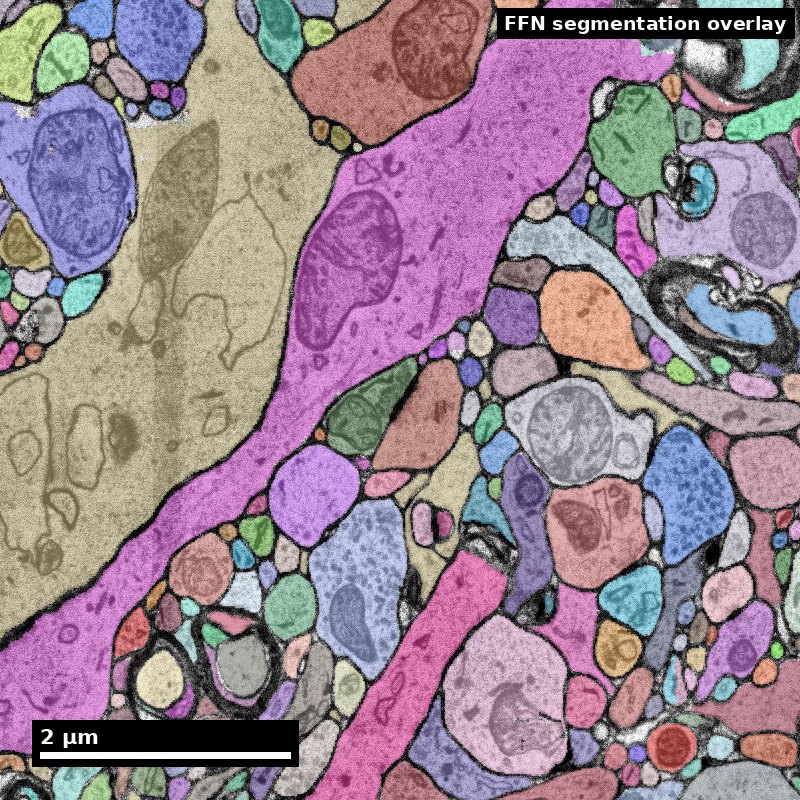
Object segmentation over electron microscopy
H01 release · Lichtman Lab / Harvard & Connectomics at Google · CC BY 4.0
Shapson-Coe et al. (2024) · doi:10.1126/science.adk4858
Slide 2 of 19
Learning Objectives
- Curate technical artifacts that demonstrate end-to-end capability
- Write reflective commentary linking decisions, errors, and growth
- Integrate peer/mentor feedback into a revised final portfolio
- Present a coherent research identity and next-step plan
Slide 3 of 19
Capability Target
Submit a capstone portfolio that proves technical capability, communicates decision quality, and demonstrates iterative growth through feedback. Operationally: every artifact carries a caption naming the competency it proves and what a reviewer can check, the portfolio distinguishes what you did from what you were given, and at least one artifact shows a version that was wrong alongside the correction and the reason.
Slide 4 of 19
Concept Focus
1) Portfolio as evidence architecture
- Technical: artifacts should be organized by competency claims, not chronology.
- Plain language: group work by what it proves you can do.
- Misconception guardrail: more artifacts make a stronger portfolio.
Figure description and teaching notes
Further teaching detail from the module:
**Technical:** artifacts should be organized by competency claims, not chronology. Six well-captioned artifacts covering distinct competencies outperform fifteen that cluster on one. Where two artifacts prove the same thing, keep the stronger and cut the other; the cut is itself evidence of judgment.
Slide 5 of 19
Core Workflow
- Define the competency claims first, in writing, then ask what evidence each requires. Working the other way round produces a folder of what you happen to have.
- Select artifacts against those claims, cutting duplicates and keeping the version that shows the most judgment rather than the most polish.
- Write one four-line evidence caption per artifact, checking that line three names something a stranger can verify.
Slide 6 of 19
Core Workflow (continued)
- Add reflection notes on decisions, errors, and revisions, naming the alternative not taken in each case.
Slide 7 of 19
Core Workflow (continued)
- Run the permission and provenance check across every artifact, and pin dataset versions.
- Run peer or mentor review with a stated decision, criterion, stage, and deadline for each artifact you send.
- Revise, record what changed and why in a visible revision log, and publish the package with a README that tells a two-minute reader where to start.
Slide 8 of 19
Run of Show (60 min)
- 00:00-08:00 | Portfolio quality exemplar
- 08:00-20:00 | Competency-claim mapping
- 20:00-34:00 | Artifact curation and caption drafting
- 34:00-46:00 | Feedback exchange round
Slide 9 of 19
Run of Show (60 min) (continued)
- 46:00-56:00 | Revision planning
- 56:00-60:00 | Final submission checklist
Slide 10 of 19
Misconceptions to Watch
- Misconception guardrail: more artifacts make a stronger portfolio.
- Misconception guardrail: describing what you enjoyed about a project counts as reflection.
- Misconception guardrail: a final version is stronger evidence when the earlier drafts are removed.
- Misconception guardrail: a good artifact speaks for itself and needs no caption.
Slide 11 of 19
Misconceptions to Watch (continued)
- Misconception guardrail: asking a narrow question wastes the reviewer's expertise.
- Misconception guardrail: work you did yourself is automatically yours to publish.
Slide 12 of 19
Studio Activity
Scenario: You are preparing your final portfolio for a competitive research opportunity. Assume the reviewer spends two minutes on the first pass and opens exactly one artifact.
Slide 13 of 19
Activity Output Checklist
- Evidence-linked artifact submitted.
- At least one limitation or uncertainty stated.
- Revision point captured from feedback.
Slide 14 of 19
Assessment Rubric
- Minimum pass: portfolio claims are evidence-backed; reflection identifies at least one meaningful revision loop; feedback is incorporated with clear changes; contributions in group work are stated explicitly.
- Strong performance: demonstrates cross-module synthesis and transfer, highlights uncertainty and correction with technical maturity, communicates a future growth plan with concrete milestones, and includes at least one artifact whose earlier wrong version is shown alongside the correction and its reason.
Figure description and teaching notes
Further teaching detail from the module:
**Common failure to flag:** artifact dump with weak competency mapping, reflection limited to narrative without analytical depth, and minimal response to peer critique. Also flag portfolios where every caption line three is missing, since that is the difference between a folder and evidence.
Slide 15 of 19
Assessment Rubric (continued)
- Common failure to flag: artifact dump with weak competency mapping, reflection limited to narrative without analytical depth, and minimal response to peer critique.
Slide 16 of 19
Exit Ticket
Choose one artifact and write its four lines: one competency claim it supports, what you did versus what you were given, one thing a reviewer can verify and where, and one limitation with the revision you would make next.
Slide 17 of 19
References (Instructor)
- Program portfolio templates and competency rubrics.
Slide 18 of 19
Teaching Materials
- Module page: /modules/module25/
- Session kit: /teaching/sessions/module25/
- Worksheet: /assets/worksheets/module25/module25-activity.md
Slide 19 of 19
Read, review, or teach
The reading version includes figure descriptions and discussion guidance.
Nanoscale text: CC BY 4.0. Scientific figures retain their individual credits.