Slide 1 of 19
 Nanoscale · Module 24
Career Pathways and Graduate School Preparation
Teaching Deck
Human cortex · H01
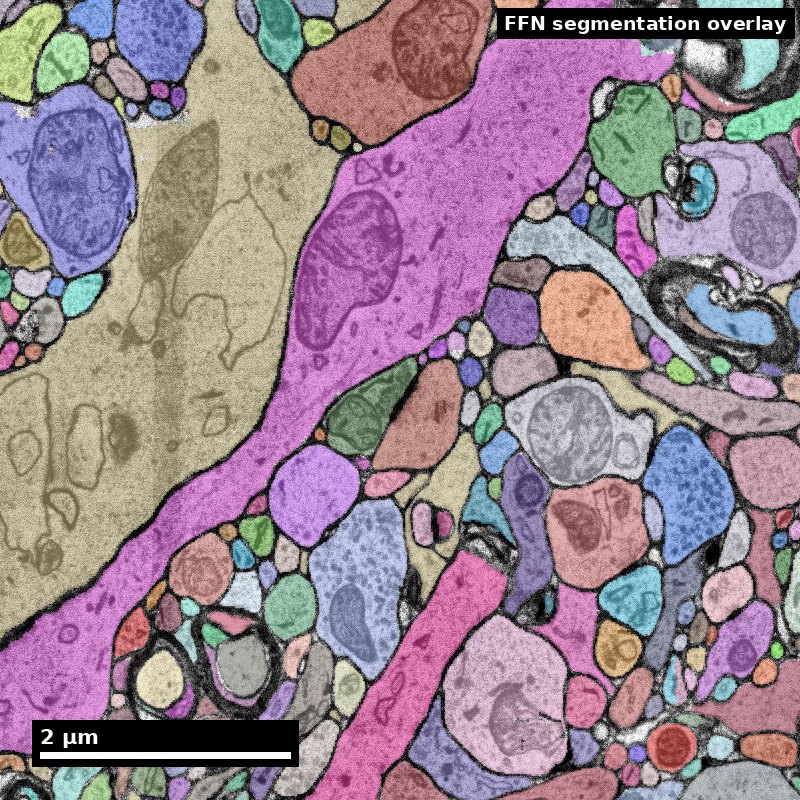
Object segmentation over electron microscopy
H01 release · Lichtman Lab / Harvard & Connectomics at Google · CC BY 4.0
Shapson-Coe et al. (2024) · doi:10.1126/science.adk4858
Slide 2 of 19
Learning Objectives
- Map connectomics-relevant career pathways and required competencies
- Evaluate graduate programs or roles using evidence-based fit criteria
- Draft targeted outreach messages to mentors and programs
- Identify hidden-curriculum factors in admissions and hiring
Slide 3 of 19
Capability Target
Produce a 12-month pathway plan (skills, applications, mentoring actions) with explicit fit criteria and decision checkpoints. Operationally: you can name two or three realistic next steps and say what evidence each requires, you have written the actual outreach messages rather than planning to, and every deadline that gates a step is in a calendar with its lead time attached.
Slide 4 of 19
Concept Focus
1) Pathway fit is capability-based
- Technical: match role or program requirements to demonstrated competencies, not only interests.
- Plain language: choose paths where your current skills plus a realistic growth plan make sense.
- Misconception guardrail: a program's prestige is a sufficient proxy for whether it fits you.
Figure description and teaching notes
Further teaching detail from the module:
**Technical:** match role or program requirements to demonstrated competencies, not only interests. For each target, write the two or three capabilities it actually selects on and the artifact in your portfolio that demonstrates each. Empty cells are your work plan for the next 90 days; they are not disqualifications.
Slide 5 of 19
Core Workflow
- Define two or three realistic target pathways, each named specifically enough to have a deadline (not "graduate school" but "three neuroscience PhD programs with connectomics groups").
- Build the capability gap matrix: rows are targets, columns are the capabilities each selects on, cells hold the artifact that demonstrates it or the word "gap".
Slide 6 of 19
Core Workflow (continued)
- Convert each gap into a 90-day action with an artifact as output, discarding gaps you cannot close in the time available rather than carrying them as anxiety.
Slide 7 of 19
Core Workflow (continued)
- Build the outreach plan: who, in what order, with what artifact attached, and by what date.
- Draft application and interview narratives anchored in concrete work, using one project as the spine and naming what went wrong in it.
- Run due diligence on each target by talking to current and former group members, using a fixed question set so answers are comparable.
- Iterate with mentor and peer feedback, then set dated decision checkpoints at which you will choose rather than defer.
Slide 8 of 19
Run of Show (60 min)
- 00:00-08:00 | Pathway framing and myths
- 08:00-20:00 | Capability gap mapping
- 20:00-32:00 | Program/role fit scoring
- 32:00-44:00 | Outreach message drafting
Slide 9 of 19
Run of Show (60 min) (continued)
- 44:00-54:00 | Peer feedback on fit and clarity
- 54:00-60:00 | Action-plan commitments
Slide 10 of 19
Misconceptions to Watch
- Misconception guardrail: a program's prestige is a sufficient proxy for whether it fits you.
- Misconception guardrail: publication volume alone predicts mentorship quality.
- Misconception guardrail: not knowing the unwritten rules means you are not cut out for this.
- Misconception guardrail: a career decision made now must be defended for the rest of your career.
Slide 11 of 19
Misconceptions to Watch (continued)
- Misconception guardrail: a good supervisor makes other mentors unnecessary.
- Misconception guardrail: asking for a letter is an imposition that should be kept as brief as possible.
Slide 12 of 19
Studio Activity
Scenario: You are planning your next step (graduate school, research assistantship, or industry role) in connectomics. Use real targets, real names, and real deadlines; generic targets produce generic plans.
Slide 13 of 19
Activity Output Checklist
- Evidence-linked artifact submitted.
- At least one limitation or uncertainty stated.
- Revision point captured from feedback.
Slide 14 of 19
Assessment Rubric
- Minimum pass: pathway choices are justified by capability evidence; outreach messages are specific and professional; the plan includes concrete timelines and milestones with real deadlines attached.
- Strong performance: incorporates mentorship and belonging considerations explicitly; anticipates barriers and states mitigations; uses reversibility and cost as explicit criteria; and produces at least one contact the learner initiated independently of their supervisor.
Figure description and teaching notes
Further teaching detail from the module:
**Common failure to flag:** overgeneralized plans with no evidence of fit, outreach drafts that could be sent to any laboratory, and hidden-curriculum barriers named but not mitigated. Also flag plans in which every mentorship-map role is filled by the same person.
Slide 15 of 19
Assessment Rubric (continued)
- Common failure to flag: overgeneralized plans with no evidence of fit, outreach drafts that could be sent to any laboratory, and hidden-curriculum barriers named but not mitigated.
Slide 16 of 19
Exit Ticket
Draft one 5-sentence mentor outreach email with an alignment statement naming a specific piece of their work, one relevant artifact you can link, and one question answerable in a single sentence. Then check it against one test: could this email have been sent to anyone else? If yes, rewrite the first sentence.
Slide 17 of 19
References (Instructor)
- NASEM mentorship reports and graduate-training guidance.
- Program-specific admissions and lab websites.
Slide 18 of 19
Teaching Materials
- Module page: /modules/module24/
- Session kit: /teaching/sessions/module24/
- Worksheet: /assets/worksheets/module24/module24-activity.md
Slide 19 of 19
Read, review, or teach
The reading version includes figure descriptions and discussion guidance.
Nanoscale text: CC BY 4.0. Scientific figures retain their individual credits.