Slide 1 of 20
 Nanoscale · Module 22
Scientific Writing and Presentation
Teaching Deck
Human cortex · H01
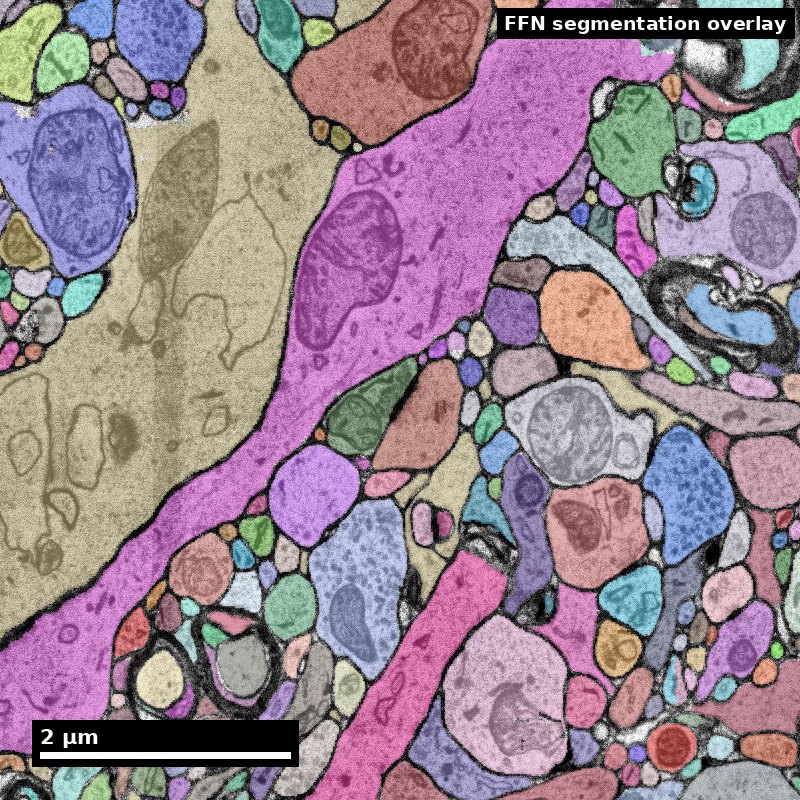
Object segmentation over electron microscopy
H01 release · Lichtman Lab / Harvard & Connectomics at Google · CC BY 4.0
Shapson-Coe et al. (2024) · doi:10.1126/science.adk4858
Slide 2 of 20
Learning Objectives
- Design a coherent scientific talk from connectomics evidence
- Adapt explanation depth for expert and non-expert audiences
- Handle audience questions without overclaiming
- Make hidden presentation norms explicit for trainees
Slide 3 of 20
Capability Target
Deliver a 10-minute connectomics talk with evidence-linked claims, explicit uncertainty, and audience-appropriate language, then respond to questions without overclaiming. Operationally: every slide carries one claim and names the dataset version behind it, you can write down in advance the two questions you are most likely to be asked, and you have a rehearsed answer to each that ends in a next test rather than a defense.
Slide 4 of 20
Concept Focus
1) Evidence-first narrative
- Technical: each major slide maps to one core claim and one evidence source: a named figure panel, a metric with an effect size, and the dataset version it came from.
- Plain language: do not ask the audience to infer your logic. A listener reconstructing why slide 5 follows slide 4 is not listening to slide 6.
- Misconception guardrail: a compelling narrative arc can carry a claim the evidence does not support.
Figure description and teaching notes
Further teaching detail from the module:
**Technical:** each major slide maps to one core claim and one evidence source: a named figure panel, a metric with an effect size, and the dataset version it came from. Build the claim tree before opening slide software. A claim with no evidence node is background and belongs in a sentence, not a slide.
Slide 5 of 20
Core Workflow
- Build the claim tree on paper: question at the root, two or three claims, one evidence item and one caveat under each, deleting any claim you cannot attach evidence to.
- Write the time budget for your slot, then select the minimal slide set that preserves the inferential logic; every surviving slide must answer "which node of the claim tree is this?"
Slide 6 of 20
Core Workflow (continued)
- Draft the one-line provenance statement for the data slide: species and region, imaging modality and resolution, segmentation pipeline, proofreading or materialization version, and any exclusion criterion.
Slide 7 of 20
Core Workflow (continued)
- Rehearse against a timer with no audience and cut to the budget, then rehearse again with transitions spoken aloud, because the sentence carrying slide 4 into slide 5 is the one people improvise badly.
- Run peer critique with one narrow brief: mark every sentence where the spoken claim is stronger than the slide's evidence.
- Write the two most likely questions and a three-sentence answer to each, choosing the answer shape from the question-type taxonomy.
Slide 8 of 20
Core Workflow (continued)
- Revise with explicit uncertainty statements, checking the rung is identical in slide, speech, and prepared answer.
Slide 9 of 20
Run of Show (60 min)
- 00:00-08:00 | Framing and exemplar
- 08:00-18:00 | Claim tree workshop
- 18:00-30:00 | Slide drafting sprint
- 30:00-42:00 | Peer critique round
Slide 10 of 20
Run of Show (60 min) (continued)
- 42:00-54:00 | Q&A simulation
- 54:00-60:00 | Debrief and competency check
Slide 11 of 20
Misconceptions to Watch
- Misconception guardrail: a compelling narrative arc can carry a claim the evidence does not support.
- Misconception guardrail: caveats can be dropped for a general audience because they would not understand them anyway.
- Misconception guardrail: answering confidently is what makes an answer credible.
- Misconception guardrail: speaking faster is a legitimate way to fit more material into a fixed slot.
Slide 12 of 20
Misconceptions to Watch (continued)
- Misconception guardrail: hedging weakens a talk and should be minimized.
- Misconception guardrail: every question in Q&A is an attack that must be rebutted.
Slide 13 of 20
Studio Activity
Scenario: You are presenting one connectomics result to mixed audience members (domain experts + trainees). Use your own result if you have one. Otherwise: in a cortical EM volume, layer 4 excitatory neurons form 3.2x more synapses onto PV+ interneurons than a degree-preserving null model predicts, from 847 connections at a specific materialization version, with roughly a third of the relevant arbors proofread. Two people in the room work on segmentation; one is a physiologist who has never opened an EM volume.
Slide 14 of 20
Activity Output Checklist
- Evidence-linked artifact submitted.
- At least one limitation or uncertainty stated.
- Revision point captured from feedback.
Slide 15 of 20
Assessment Rubric
- Minimum pass: claims are evidence-linked and caveats visible; language is audience-appropriate without technical distortion; Q&A responses include limits and follow-up tests; the deck names dataset and version.
- Strong performance: anticipates likely critiques and addresses them proactively; balances accessibility with methodological precision; concedes the valid part of a challenge while defending the rest; keeps the same uncertainty rung in slide, speech, and answer.
Figure description and teaching notes
Further teaching detail from the module:
**Common failure to flag:** overcompressed methods leading to overclaiming, jargon-heavy explanation with missing context, and defensive Q&A that asserts authority instead of citing evidence. Flag over-conceding too: abandoning a supported result under mild challenge is a calibration failure, not modesty.
Slide 16 of 20
Assessment Rubric (continued)
- Common failure to flag: overcompressed methods leading to overclaiming, jargon-heavy explanation with missing context, and defensive Q&A that asserts authority instead of citing evidence.
Slide 17 of 20
Exit Ticket
Write your 60-second talk opener with the core question, one evidence-backed finding, one explicit caveat, and one sentence pre-empting the challenge you most expect. Read it aloud against a timer; if it runs past 60 seconds, cut the background sentence first.
Slide 18 of 20
References (Instructor)
- Gopen and Swan (1990) - clarity principles for scientific prose.
- Technical Track Journal Club papers for evidence-backed slide narratives.
Slide 19 of 20
Teaching Materials
- Module page: /modules/module22/
- Session kit: /teaching/sessions/module22/
- Worksheet: /assets/worksheets/module22/module22-activity.md
Slide 20 of 20
Read, review, or teach
The reading version includes figure descriptions and discussion guidance.
Nanoscale text: CC BY 4.0. Scientific figures retain their individual credits.