Slide 1 of 20
 Nanoscale · Module 20
Statistical Models and Inference for Connectomics
Teaching Deck
Human cortex · H01
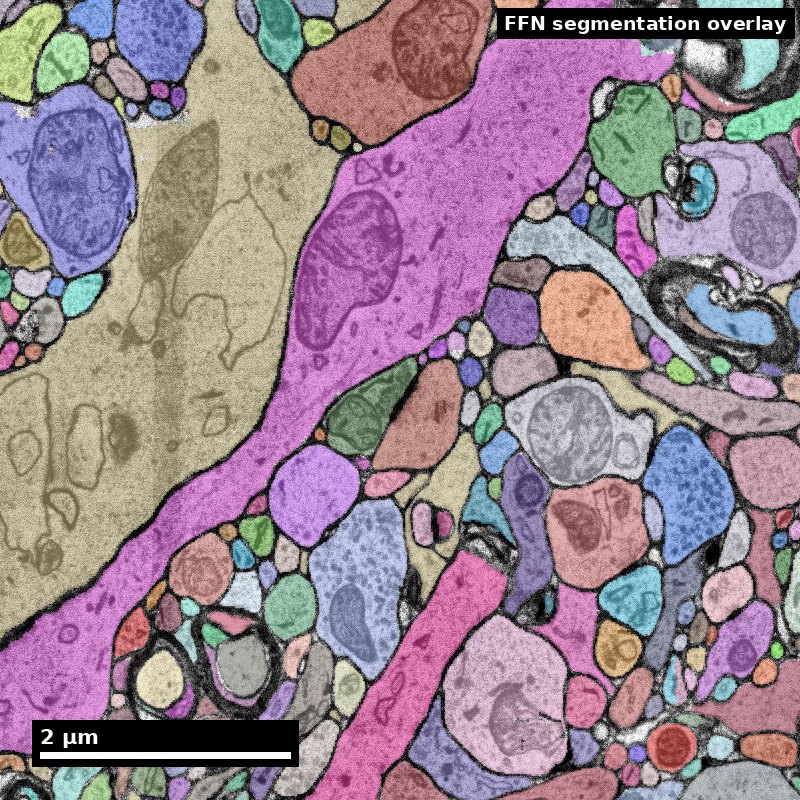
Object segmentation over electron microscopy
H01 release · Lichtman Lab / Harvard & Connectomics at Google · CC BY 4.0
Shapson-Coe et al. (2024) · doi:10.1126/science.adk4858
Slide 2 of 20
Learning Objectives
- Choose statistical models aligned to connectomics question types
- Construct and justify appropriate null models for graph analyses
- Control multiplicity and uncertainty in high-dimensional motif tests
- Report inferential claims with explicit assumptions and limits
Slide 3 of 20
Capability Target
Design and execute a connectomics inference plan that includes null-model choice, multiplicity control, uncertainty reporting, and explicit claim boundaries.
Slide 4 of 20
Concept Focus
1) Null models encode scientific assumptions
- Technical: null models should preserve relevant graph constraints (degree sequence, spatial limits, cell-class composition) while randomizing the tested structure.
- Plain language: your "chance baseline" must reflect biology and data collection realities.
- Misconception guardrail: a generic random graph is an adequate null for a connectome.
Slide 5 of 20
Core Workflow
- Question-to-test mapping
- Convert biological question into estimand(s), test set, and effect-size target.
- Null-model design
- Define null constraints and why they preserve key confounders.
Slide 6 of 20
Core Workflow (continued)
- Inference execution
- Run model/tests with preregistered thresholds and multiplicity controls.
Slide 7 of 20
Core Workflow (continued)
- Robustness checks
- Test sensitivity to preprocessing variant, sampling region, and parameter choice.
- Claim calibration
- Report supported, uncertain, and unsupported claims in separate blocks.
Slide 8 of 20
Run of Show (60 min)
- 00:00-06:00 | Framing: the null is the scientific step
- 06:00-18:00 | Worked example: reciprocity across nulls
- 18:00-30:00 | Guided practice: write the uninteresting explanation
- 30:00-40:00 | Multiplicity
Figure description and teaching notes
Pre-class preparation (15 min async)
Read Technical Unit 09, section 2 — the worked reciprocity example across three null models.
Bring one motif or connectivity claim from a paper you have read, with its stated null.
Minute-by-minute plan
00:00-06:00 | Framing: the null is the scientific step
Prompt: "Same graph, same motif, three null models, three different conclusions. Which one is right?"
Establish that the answer depends on what the hypothesis treats as uninteresting.
06:00-18:00 | Worked example: reciprocity across nulls
Instructor works the Unit 09 example live: 100 neurons, 1,200 edges, 210 reciprocal pairs.
Erdos-Renyi gives 2.9x. Degree-preserving gives 1.4x. Degree-and-distance gives 1.14x, not significant.
Think aloud about which null matches which hypothesis, not which gives the nicer number.
18:00-30:00 | Guided practice: write the uninteresting explanation
In pairs, learners take their brought-in claim and write, in words, the sentence "this result would be uninteresting if ___".
Then name the null that preserves exactly that.
Instructor circulates asking "what does your null preserve, and what does it randomize?"
30:00-40:00 | Multiplicity
Count the tests actually run, including unreported ones. Choose a correction and justify it.
Surface the dependence problem: triad counts move together, so analytic p-values overstate confidence. Permutation inference respects the dependence.
40:00-50:00 | Robustness and error sensitivity
Each learner names one preprocessing choice (synapse threshold, inclusion criteria, boundary handling) and states how they would test sensitivity to it.
Introduce the error-simulation check: perturb the graph at measured merge and split rates, report the band.
50:00-57:00 | Competency check
Each learner submits: estimand, null model with what it preserves, correction strategy, one robustness check, and one claim they will not make.
57:00-60:00 | Exit ticket
"One result I now doubt, and the null model that would settle it."
Formative checkpoints
At 30 minutes: every pair can state their null in terms of what it preserves, not just its name. If not, re-teach before proceeding.
At 50 minutes: learners distinguish an exploratory finding from a confirmatory one in their own write-up.
Slide 9 of 20
Run of Show (60 min) (continued)
- 40:00-50:00 | Robustness and error sensitivity
- 50:00-57:00 | Competency check
- 57:00-60:00 | Exit ticket
Slide 10 of 20
Misconceptions to Watch
- Misconception guardrail: a generic random graph is an adequate null for a connectome.
- Misconception guardrail: a small p-value speaks for itself, regardless of how many tests were run.
- Misconception guardrail: a hypothesis found in the data can be confirmed by the same data.
Slide 11 of 20
Studio Activity
Scenario: A team reports motif enrichment in one dataset and asks whether the claim generalizes.
Slide 12 of 20
Activity Output Checklist
- Evidence-linked artifact submitted.
- At least one limitation or uncertainty stated.
- Revision point captured from feedback.
Slide 13 of 20
Assessment Rubric
Minimum pass
- Null model is justified and the constraints it preserves are listed explicitly, in terms of what the hypothesis treats as uninteresting.
- Total test count — including tests run and not reported — is documented, and a named correction is applied against it.
- Claims are partitioned into exploratory and confirmatory blocks with different language in each.
Slide 14 of 20
Assessment Rubric
Strong performance
- Sensitivity analysis spans at least two preprocessing choices (synapse threshold, inclusion criteria), with results reported for each variant.
- Effect sizes with uncertainty intervals appear alongside every significance statement.
- Error-sensitivity band computed at measured merge and split rates, with the direction of merge bias named.
Slide 15 of 20
Assessment Rubric (continued)
- Generalization boundary stated: which dataset, version, and region the claim covers, and what it says nothing about.
Slide 16 of 20
Assessment Rubric
Common failure modes
- Null model choice disconnected from the biological question.
- Selective reporting: significant outcomes shown, the full test count uncounted.
- Exploratory signal conflated with validated inference.
- Analytic p-values used where dependence between tests calls for permutation.
Slide 17 of 20
Exit Ticket
Write a 6-8 sentence inference note that includes:
- hypothesis and estimand,
- null-model assumptions,
- multiplicity strategy,
- one robust conclusion and one unresolved uncertainty.
Slide 18 of 20
References (Instructor)
- Bassett, Zurn, and Gold (2018) - model use in network neuroscience.
- Januszewski et al. (2018) - segmentation performance and uncertainty context.
- MICrONS/FlyWire/H01 analyses for cross-dataset inference constraints.
Slide 19 of 20
Teaching Materials
- Module page: /modules/module20/
- Session kit: /teaching/sessions/module20/
- Worksheet: /assets/worksheets/module20/module20-activity.md
Slide 20 of 20
Read, review, or teach
The reading version includes figure descriptions and discussion guidance.
Nanoscale text: CC BY 4.0. Scientific figures retain their individual credits.