Slide 1 of 26
 Nanoscale · Module 19
Peer Review and Scientific Ethics
Teaching Deck
Human cortex · H01
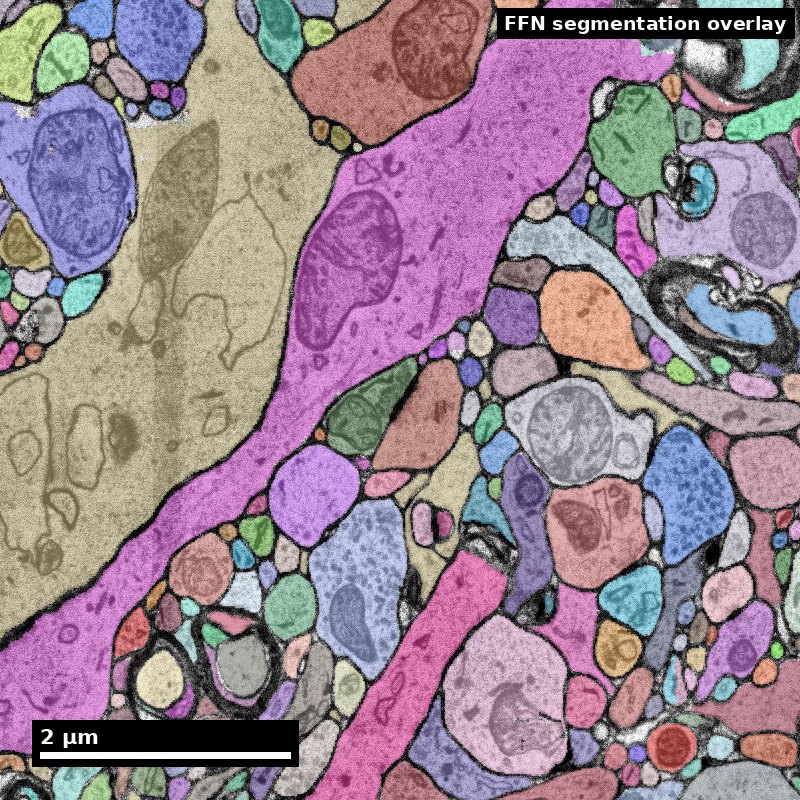
Object segmentation over electron microscopy
H01 release · Lichtman Lab / Harvard & Connectomics at Google · CC BY 4.0
Shapson-Coe et al. (2024) · doi:10.1126/science.adk4858
Slide 2 of 26
Learning Objectives
- Evaluate connectomics manuscripts for methodological and interpretive rigor
- Identify ethics risks in data handling, authorship, and reporting
- Draft constructive, technically specific peer-review feedback
- Make transparent integrity decisions in ambiguous collaboration scenarios
Slide 3 of 26
Capability Target
Produce a technically rigorous manuscript review and an ethics-risk decision memo for a connectomics study, including actionable recommendations and integrity safeguards. Students will be able to distinguish constructive criticism from destructive criticism, identify the specific ethical challenges that arise in large-scale connectomics collaborations, and make documented decisions when facing ambiguous integrity situations.
Slide 4 of 26
Concept Focus
1) What peer reviewers look for in connectomics papers
- Technical: effective peer review of connectomics manuscripts requires evaluating several domain-specific dimensions:
- Data quality documentation: does the paper report the segmentation error rate (merge/split metrics), synapse detection precision/recall, and proofreading completeness? Without these, no biological claim is evaluable.
Slide 5 of 26
Concept Focus (continued)
- Statistical rigor: are null models appropriate for the graph structure? Are multiple comparisons handled? Are effect sizes reported alongside p-values? Is there sensitivity analysis for key thresholds?
- Interpretation boundaries: does the paper distinguish confirmed findings from exploratory observations? Are conclusions limited to what the data can actually support (e.g., one brain region in one animal at one developmental time point)?
Slide 6 of 26
Concept Focus (continued)
- Data availability: are the dataset version, CAVE materialization, code repository, and parameters sufficient for reproduction? Can a reader trace every claim to a specific data artifact?
- Plain language: a good reviewer checks whether the methods can actually support the claims, whether the statistics are honest, and whether someone else could reproduce the work.
Slide 7 of 26
Concept Focus (continued)
- Misconception guardrail: "interesting result" is not a substitute for methodological soundness. A novel finding reported with inadequate methods documentation is worse than an incremental finding reported transparently.
Slide 8 of 26
Core Workflow
- Pre-review framing
- Identify manuscript claim types (descriptive, predictive, explanatory).
- Note the dataset, methods pipeline, and stated limitations.
- Methods-evidence audit
Slide 9 of 26
Core Workflow (continued)
- Check dataset versioning, preprocessing transparency, QC thresholds, and statistical controls.
- Verify that each claim maps to a specific figure panel and statistical test.
Slide 10 of 26
Core Workflow (continued)
- Interpretation audit
- Flag overclaiming, underreported uncertainty, and missing limitations.
- Check whether conclusions are bounded by the data (one brain region, one species, one time point).
Slide 11 of 26
Core Workflow (continued)
- Ethics-risk scan
- Evaluate authorship clarity, disclosure statements, data-governance assumptions, and consent coverage.
- Check for signs of selective reporting (missing negative results, single-threshold analyses).
Slide 12 of 26
Core Workflow (continued)
- Actionable response package
- Write revision requests prioritized by scientific impact and integrity risk.
- Use constructive language: problem, evidence, suggestion.
Slide 13 of 26
Run of Show (60 min)
- 00:00-08:00 | Constructive vs destructive criticism
- 08:00-12:00 | What reviewers look for in connectomics
- 12:00-28:00 | Methods-evidence audit exercise
- 28:00-38:00 | Ethics-risk scan
Figure description and teaching notes
Materials needed
One mock connectomics preprint (2-3 pages: abstract, key methods paragraph, two result figures with legends, and discussion excerpt). Pre-seeded with 4 issues: one methods gap, one overclaim, one ethics concern (ambiguous authorship), and one example of selective reporting.
Structured review form template (one per student).
Ethics-risk checklist (human tissue, attribution, data sharing, selective reporting).
Two examples of real reviewer comments: one constructive, one destructive.
Timing and instructor script
00:00-08:00 | Constructive vs destructive criticism
Instructor displays two real (anonymized) reviewer comments for the same paper. One is specific, evidence-based, and actionable; the other is vague and dismissive. Students identify which is which and explain why. Key script line: "The most rigorous reviewer is not the harshest one. Rigor means specificity. Vague criticism is lazy, not tough."
08:00-12:00 | What reviewers look for in connectomics
Instructor presents a checklist of connectomics-specific review criteria: data quality metrics, appropriate null models, reproducibility metadata, interpretation boundaries, and data availability. Brief discussion of how these differ from standard neuroscience review criteria.
12:00-28:00 | Methods-evidence audit exercise
Students read the mock preprint individually. Using the structured review form, each student identifies: (a) one methods gap with specific missing information, (b) one overclaim where the language exceeds the evidence, (c) one figure panel where uncertainty is insufficiently represented. Instructor circulates, prompting: "Can you point to the exact sentence that overclaims? What would the bounded version say?"
28:00-38:00 | Ethics-risk scan
Students use the ethics-risk checklist to scan the mock preprint. They identify: (a) the authorship ambiguity (the mock paper lists "the consortium" as an author without specifying individual contributions), (b) the selective reporting concern (only one of three tested motifs is discussed in results). Students draft a one-paragraph ethics memo for each issue with a concrete mitigation recommendation.
38:00-50:00 | Decision memo drafting
In pairs, students draft a complete review decision memo: (a) summary of the paper's contribution, (b) major concerns (methods, interpretation, ethics) with evidence, (c) minor concerns, (d) recommendation (accept with revisions, major revisions, or reject) with explicit rationale. Students must ensure their recommendation is consistent with their documented concerns.
50:00-58:00 | Peer review of reviews
Pairs swap decision memos and evaluate: Is the review specific and evidence-based? Is the recommendation consistent with the concerns? Is the tone constructive? Each pair writes one improvement suggestion.
58:00-60:00 | Competency check
Each student submits their structured review form and decision memo. Instructor collects for after-session review.
Success criteria for this session
Review comments reference specific manuscript locations (figure panels, paragraph numbers, methods details).
Ethics concerns are tied to concrete workflow practices, not abstract principles.
Recommendations are consistent with documented findings.
All feedback uses constructive language (problem, evidence, suggestion).
Slide 14 of 26
Run of Show (60 min) (continued)
- 38:00-50:00 | Decision memo drafting
- 50:00-58:00 | Peer review of reviews
- 58:00-60:00 | Competency check
Slide 15 of 26
Misconceptions to Watch
- Misconception guardrail: "interesting result" is not a substitute for methodological soundness. A novel finding reported with inadequate methods documentation is worse than an incremental finding reported transparently.
- Misconception guardrail: ethics in connectomics is not just about IRB approval. It extends to data sharing, attribution, responsible AI, and honest reporting throughout the research lifecycle.
- Misconception guardrail: "interesting result" is not a substitute for methodological soundness.
Slide 16 of 26
Misconceptions to Watch (continued)
- Misconception guardrail: being harsh is not the same as being rigorous. The most rigorous reviews are also the most specific and constructive.
- Misconception guardrail: compliance checklists alone do not ensure good practice. Integrity requires ongoing attention to workflow transparency.
- Misconception guardrail: contribution volume alone does not define authorship role. A person who proofread 10,000 segments may deserve authorship; a person who ran one analysis script may not. The criteria must be explicit and agreed upon in advance.
Slide 17 of 26
Studio Activity
Scenario: Your team is acting as reviewers for a connectomics preprint claiming a novel circuit motif --- a specific three-neuron feed-forward inhibitory loop --- with translational implications for understanding epilepsy. The preprint uses MICrONS minnie65 data (CAVE materialization v661) and reports 3.5x enrichment of this motif relative to a degree-preserving random graph null model (p < 0.001 after Bonferroni correction across 13 three-node motif classes). The methods section does not report the synapse confidence threshold, does not mention boundary neuron handling, and lists "MICrONS Consortium" as a co-author without individual contribution details. The discussion section states that "this motif likely plays a causal role in seizure propagation."
Slide 18 of 26
Activity Output Checklist
- Evidence-linked artifact submitted.
- At least one limitation or uncertainty stated.
- Revision point captured from feedback.
Slide 19 of 26
Assessment Rubric
Minimum pass
- Review comments are specific and evidence-linked (referencing figure panels, methods details, or specific sentences).
- Ethics risks are identified with concrete mitigations tied to workflow practices.
- Recommendation is consistent with documented findings.
Slide 20 of 26
Assessment Rubric
Strong performance
- Distinguishes fixable technical issues from fundamental validity failures.
- Balances rigor with constructive tone and practical revision advice.
- Uses transparent criteria for authorship/integrity judgments.
- Anticipates author responses and pre-addresses potential objections.
Slide 21 of 26
Assessment Rubric
Common failure modes
- Generic critique with no evidence references ("the statistics are weak").
- Ethics discussion disconnected from actual workflow practices.
- Inconsistent recommendation versus identified risks (e.g., listing major concerns but recommending accept with minor revisions).
- Destructive tone that undermines the credibility of valid criticisms.
Slide 22 of 26
Exit Ticket
Choose a connectomics abstract (from a real paper or the mock preprint) and produce:
- One high-priority methods concern (what is missing, why it matters, what should be added).
- One interpretation concern (which sentence overclaims, what the bounded version would say).
- One ethics/integrity concern (tied to a specific workflow practice, not an abstract principle).
Slide 23 of 26
Exit Ticket (continued)
- One actionable revision request for each of the above, written in constructive language.
Slide 24 of 26
References (Instructor)
- COPE Core Practices.
- ICMJE authorship recommendations.
- FAIR principles (Wilkinson et al., 2016).
Slide 25 of 26
Teaching Materials
- Module page: /modules/module19/
- Session kit: /teaching/sessions/module19/
- Worksheet: /assets/worksheets/module19/module19-activity.md
Slide 26 of 26
Read, review, or teach
The reading version includes figure descriptions and discussion guidance.
Nanoscale text: CC BY 4.0. Scientific figures retain their individual credits.